

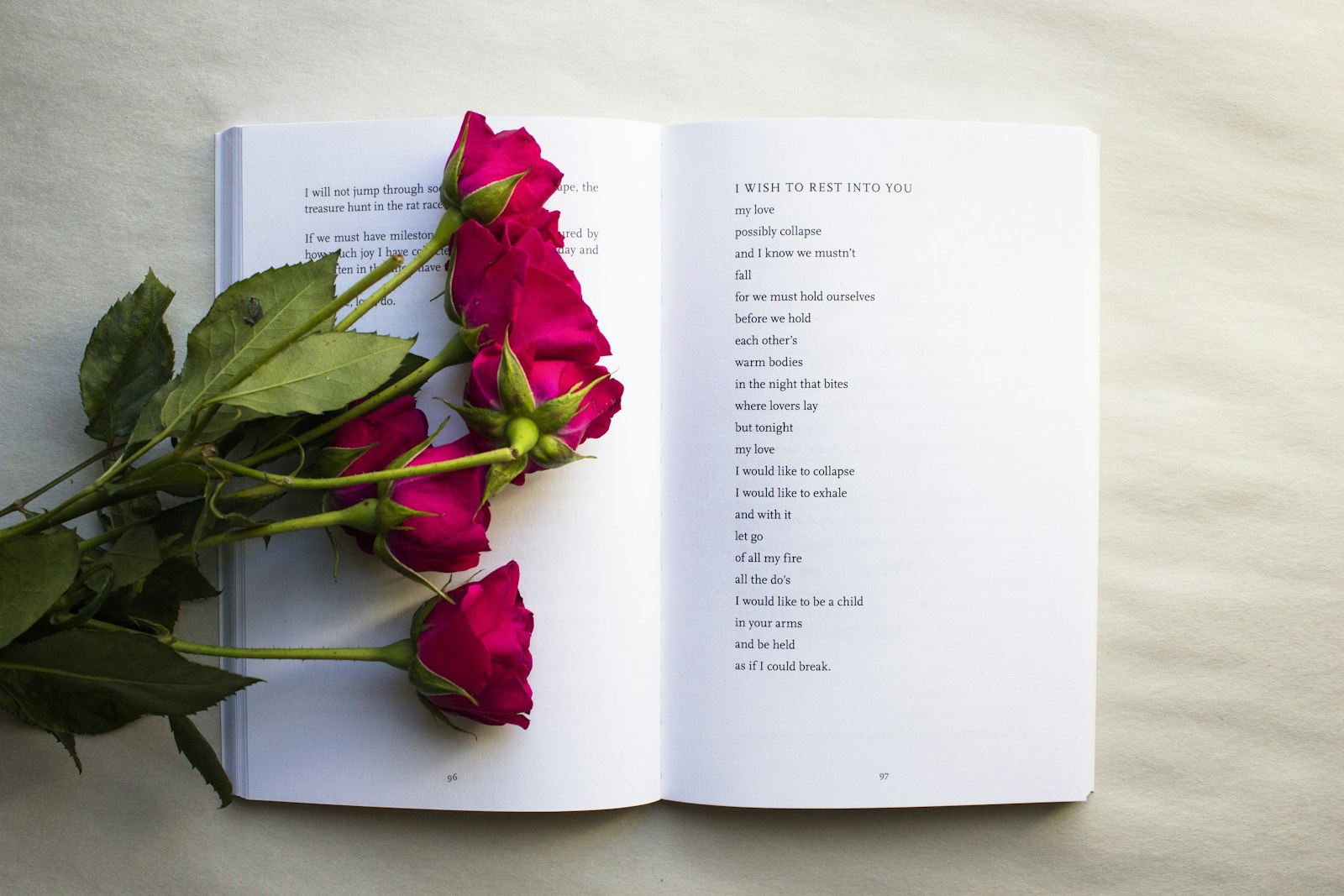
Funeral Poems for A Wife: Curated Readings
Losing a wife is a different kind of grief — private, enormous, and often very quiet. You are expected to arrange a service, greet hundreds of people, and say something about the person you shared your life with. The reading is a place where the right words, borrowed from someone else, can do the work your own voice cannot.
This guide collects funeral poems for a wife that families actually use at services. You will find short readings, love poems, religious options, and secular pieces. Each includes a few lines so you can tell whether the poem fits before you track down the full text, plus notes on who should read and how to structure the moment.
How to Choose a Funeral Poem for a Wife
A wife's funeral is often organized by a grieving husband, sometimes with help from adult children. The choice of reading should reflect the marriage, but it should also be readable by whoever stands up there. A beautiful poem nobody can get through is a worse choice than a simple one read steadily.
Here's the thing: the poem does not need to summarize her. It just needs to open one true window into who she was or what the marriage felt like. A single honest line beats a page of generic verse every time.
Start With Who She Was
Ask a few plain questions:
- Was she religious, spiritual, or firmly secular?
- Did she love language? Would she have read a particular poet?
- Was the marriage long and quiet, brief and intense, something else?
- Did she love nature, music, her work, her children?
- Is there a poem you read at your wedding, an anniversary card, or a letter she wrote?
If a poem already exists inside the marriage — a passage she quoted, a Valentine's card she saved — start there. Nothing you find on a list will land as hard as something she chose herself.
Decide Who Will Read
The person reading shapes the choice. A husband reading for his wife needs something short and readable. A daughter or son reading for their mother can handle something longer. The officiant reading on the family's behalf can deliver the most emotionally charged pieces without breaking the room open.
Short Funeral Poems for a Wife
Short readings are the right default. They are easier to get through, easier to absorb, and easier to fit into a full order of service. All of these run under 20 lines.
"Death Is Nothing At All" — Henry Scott Holland
The most widely read funeral poem in English. The voice is the person who has died, speaking to those left behind, telling them that the relationship has not ended — it has only changed form:
Death is nothing at all. I have only slipped away into the next room. I am I, and you are you. Whatever we were to each other, that we still are.
Suits religious and secular services. A strong choice for a husband reading at his own pace.
"Remember" — Christina Rossetti
Fourteen lines. The speaker asks the person she loves to remember her, then — in the final lines — gives them permission to forget and be happy:
Better by far you should forget and smile Than that you should remember and be sad.
For a wife's funeral, those two lines carry enormous weight. A widower or adult child can read this one well.
"She Is Gone" — David Harkins
Often read in a pronoun-swapped version. It gives mourners a clear choice between grief and gratitude, and it closes with a line about doing what she would have wanted.
You can shed tears that she is gone, Or you can smile because she has lived.
A good pick if she was the kind of woman who did not want a fuss.
"Warm Summer Sun" — Mark Twain
Six lines. Twain wrote it for his daughter's gravestone, but it reads beautifully for a wife — especially one buried at a garden or rural cemetery.
Love Poems as Funeral Readings
These work when you want the reading to speak directly about the marriage.
Sonnet 43 ("How Do I Love Thee?") — Elizabeth Barrett Browning
Fourteen lines. Browning wrote this for her husband, but it reads as a perfect wife funeral poem because the ending looks past death:
I love thee with the breath, Smiles, tears, of all my life; and, if God choose, I shall but love thee better after death.
The final line breaks a room open. Pick it if you have a reader who can get through it.
Sonnet 116 — William Shakespeare
"Let me not to the marriage of true minds admit impediments." Shakespeare's argument is that true love does not change when tested — and death is the final test. The last couplet is the one to land on:
If this be error and upon me proved, I never writ, nor no man ever loved.
Strong pick for a long marriage or a couple who loved language.
"Annabel Lee" — Edgar Allan Poe
Six stanzas. Poe wrote it after his wife died young. It is explicitly about a husband who refuses to stop loving his wife after her death:
But our love it was stronger by far than the love Of those who were older than we — Of many far wiser than we.
Best for a wife who died young or unexpectedly. The rhyme scheme gives a nervous reader something to lean on.
"Epitaph" — Merrit Malloy
A secular, direct poem in the voice of the person who has died, telling the living what to do with what remains: love someone else, look for her in the hands of strangers, do not stop living.
When I die, give what's left of me away To children and old men that wait to die.
Suits a practical, modest wife who did not want a traditional funeral.
Longer Funeral Poems for a Wife
If you want more weight — and you have a steady reader — these work well.
"Funeral Blues" — W.H. Auden
Four stanzas. Raw, direct, no effort to comfort:
She was my North, my South, my East and West, My working week and my Sunday rest, My noon, my midnight, my talk, my song; I thought that love would last for ever: I was wrong.
A warning: this names the size of the loss without softening it. Read it only if you want the room to sit inside the grief. For a husband reading it, practice with a backup reader standing by.
"When Tomorrow Starts Without Me" — David Romano
A longer poem in the voice of the woman who has died, reassuring those she left behind that she is safe and waiting. Runs about 30 lines. Often read for wives who died after a long illness.
"Let Evening Come" — Jane Kenyon
A secular, quiet poem about things settling into night — a shovel against a shed wall, a fox going back to its sandy den. The refrain "let evening come" reads as a kind of permission. It suits a wife who valued stillness, reading, or the outdoors.
Religious Funeral Poems for a Wife
For a woman of faith, these sit naturally next to scripture readings.
"Safely Home"
An anonymous short poem written in the voice of the wife, reassuring her family that she has arrived in heaven. Plainly Christian. Works at Catholic, Protestant, and Orthodox services.
"God Saw You Getting Tired"
A short anonymous verse that frames death as rest after a long illness:
God saw you getting tired, a cure was not to be. So he put his arms around you and whispered, "Come with me."
Fits a wife who died after a prolonged decline. Comforting for family members who watched her suffer.
"Footprints in the Sand" — Mary Stevenson
Fits a wife whose faith carried the family through hard years. The closing line — "it was then that I carried you" — lands hard at a funeral.
Secular Funeral Poems for a Wife
For a service without religious framing, these give you weight without invoking God.
"Afterglow" — Helen Lowrie Marshall
Ten lines. Asks mourners to remember good times rather than the final days. A good closing reading, especially alongside a photo slideshow.
"If I Should Go" — Joyce Grenfell
Five brisk stanzas. The speaker asks mourners not to build monuments or grieve for long, but to keep living:
If I should go before the rest of you, Break not a flower nor inscribe a stone.
Good for a wife with a sense of humor who hated fuss.
"Ithaka" — C.P. Cavafy
Not a traditional funeral poem, but its argument — that the value of a long journey is the journey itself, not the destination — works as a reading for a wife who lived fully. Read excerpts rather than the whole poem.
Sample Passages: Using a Poem Inside the Eulogy
A poem stands alone, or it anchors a eulogy. Three ways to fold one in:
As the opening:
"When I was packing up Laura's desk last week, I found a postcard she had written to herself. It had one line on it, from Mary Oliver — 'You do not have to be good.' She'd had that postcard on her bulletin board for eight years. And standing in that empty office, I understood finally that Laura had spent her whole life teaching people that. Me. Our kids. Her students. You did not have to be good for Laura to love you. You just had to be you."
As the close:
"I could go on for another hour, but Beth would already be tapping her watch. So I'll end with six lines from Mark Twain that she asked me to read today. 'Warm summer sun, shine kindly here; warm southern wind, blow softly here; green sod above, lie light, lie light — good night, dear heart, good night, good night.' Good night, Beth."
In the middle:
"After our son was born, Helen quoted a line at me from Elizabeth Barrett Browning — 'I love thee to the depth and breadth and height my soul can reach.' I told her she was being dramatic. She said, 'That is how it feels.' She was right. It was, and it is."
How to Read the Poem Without Losing Your Voice
Practical notes for whoever is reading.
- Print it big. 18pt minimum, double-spaced. Your eyes will not cooperate under stress.
- Read it twice at home the day before. No more than that — you do not want to numb yourself.
- Mark breath points. Forward slashes where you plan to pause. This keeps you from rushing.
- Bring water. Put a glass on the lectern.
- Have a backup. Ask someone to sit in the front row, ready to step up if you cannot finish. Tell them in advance.
- Pause when you need to. The room will wait. They are there for the same reason you are.
The good news? The mourners are not grading delivery. They are grateful you are willing to stand up.
Frequently Asked Questions
What is a good short funeral poem for a wife?
Henry Scott Holland's "Death Is Nothing At All" and Christina Rossetti's "Remember" are both short and frequently read at a wife's service. Each runs under one minute aloud, which helps if the reader is the widower or a close family member.
Should a husband read the poem himself?
Only if he feels steady enough. There is no expectation that the widower read. An adult child, sibling, or close friend can read in his place. Many husbands choose to read a short poem and ask someone else to deliver the eulogy.
Can I read a poem from our wedding at her funeral?
Yes. A wedding poem read at a funeral frames the marriage as a complete story. Introduce it with one sentence explaining the connection. It is one of the most moving choices a widower can make.
Are there funeral poems written specifically for a wife?
Few poems were written explicitly for a wife's funeral, but many love poems work beautifully in that context. Edgar Allan Poe's "Annabel Lee," Elizabeth Barrett Browning's Sonnet 43, and W.H. Auden's "Funeral Blues" all fit.
How long should the reading be?
Under two minutes is ideal. Families often overestimate how much a room can absorb at a funeral. A short poem read well does more than a long one read shakily.
Related Reading
If you'd like more help, these may be useful:
You don't have to write this alone.
Answer a few simple questions about your loved one, and we'll craft a personalized eulogy that sounds like it came from you.
Start My Eulogy